
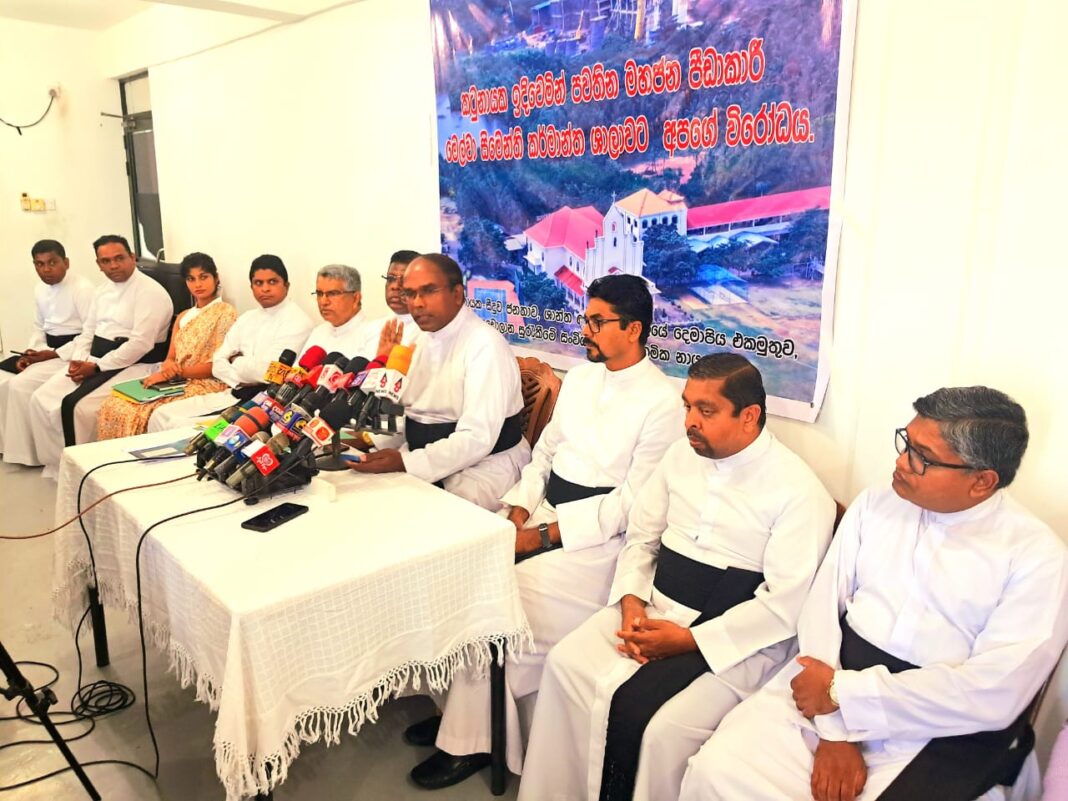

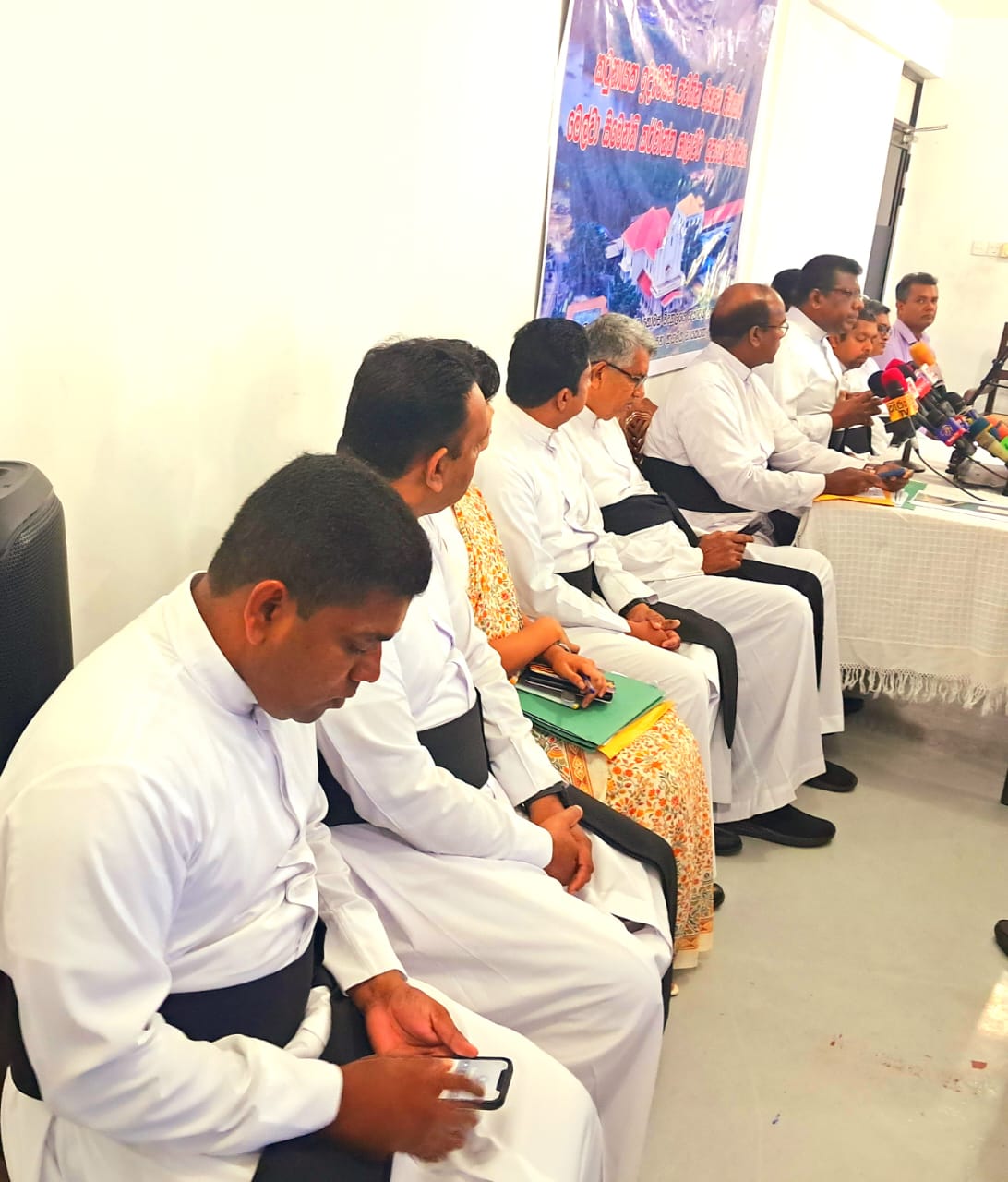
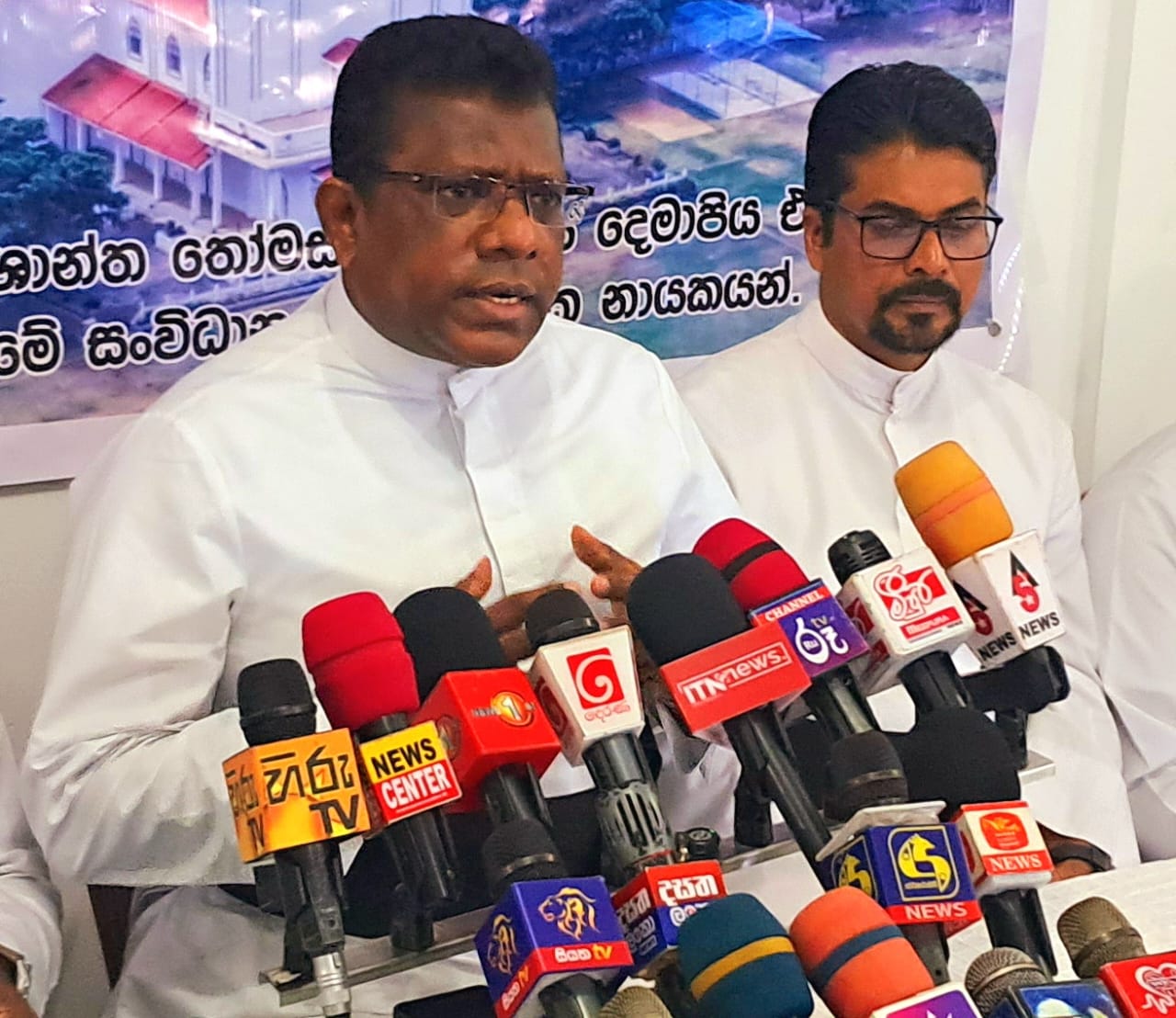
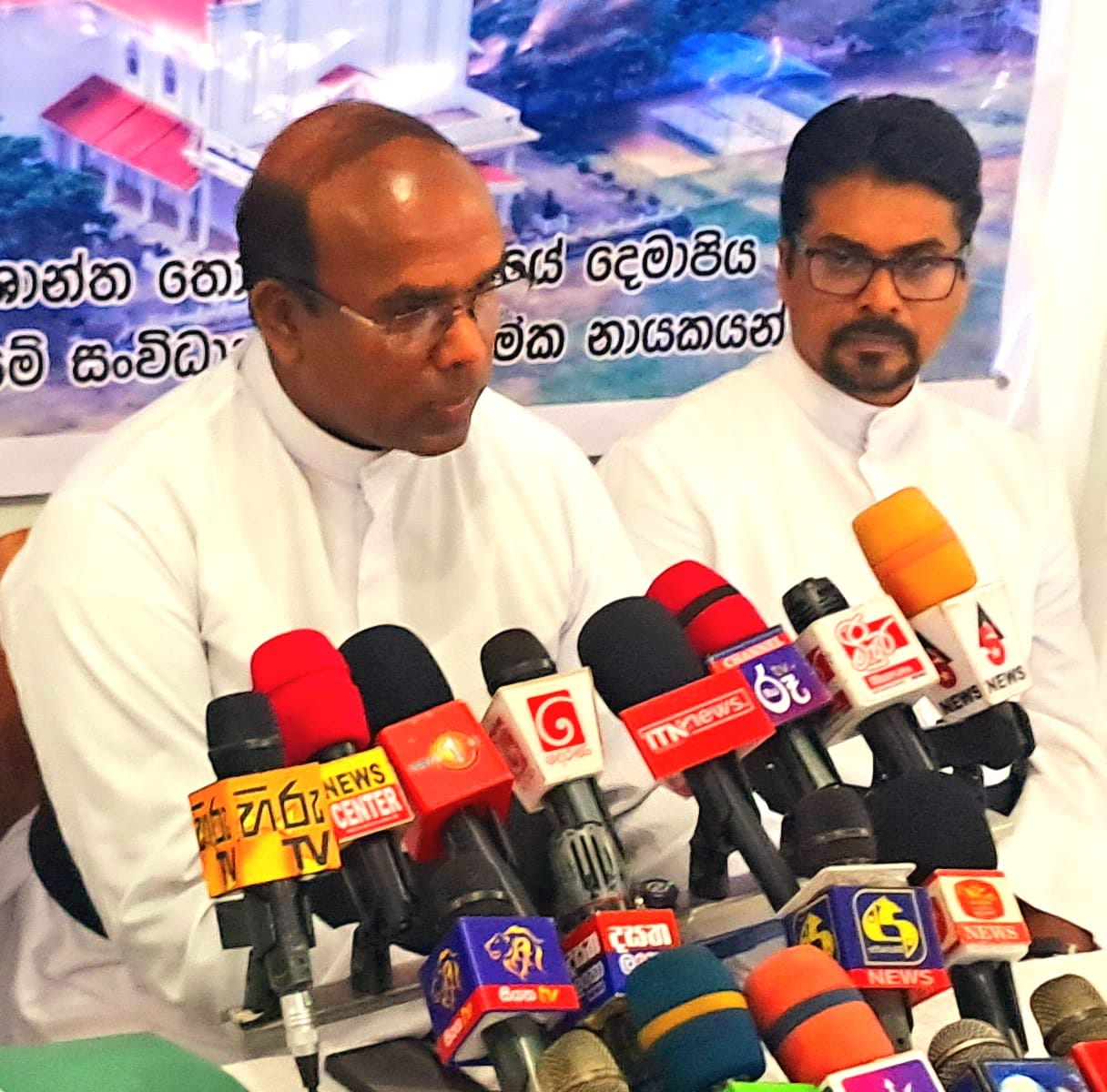
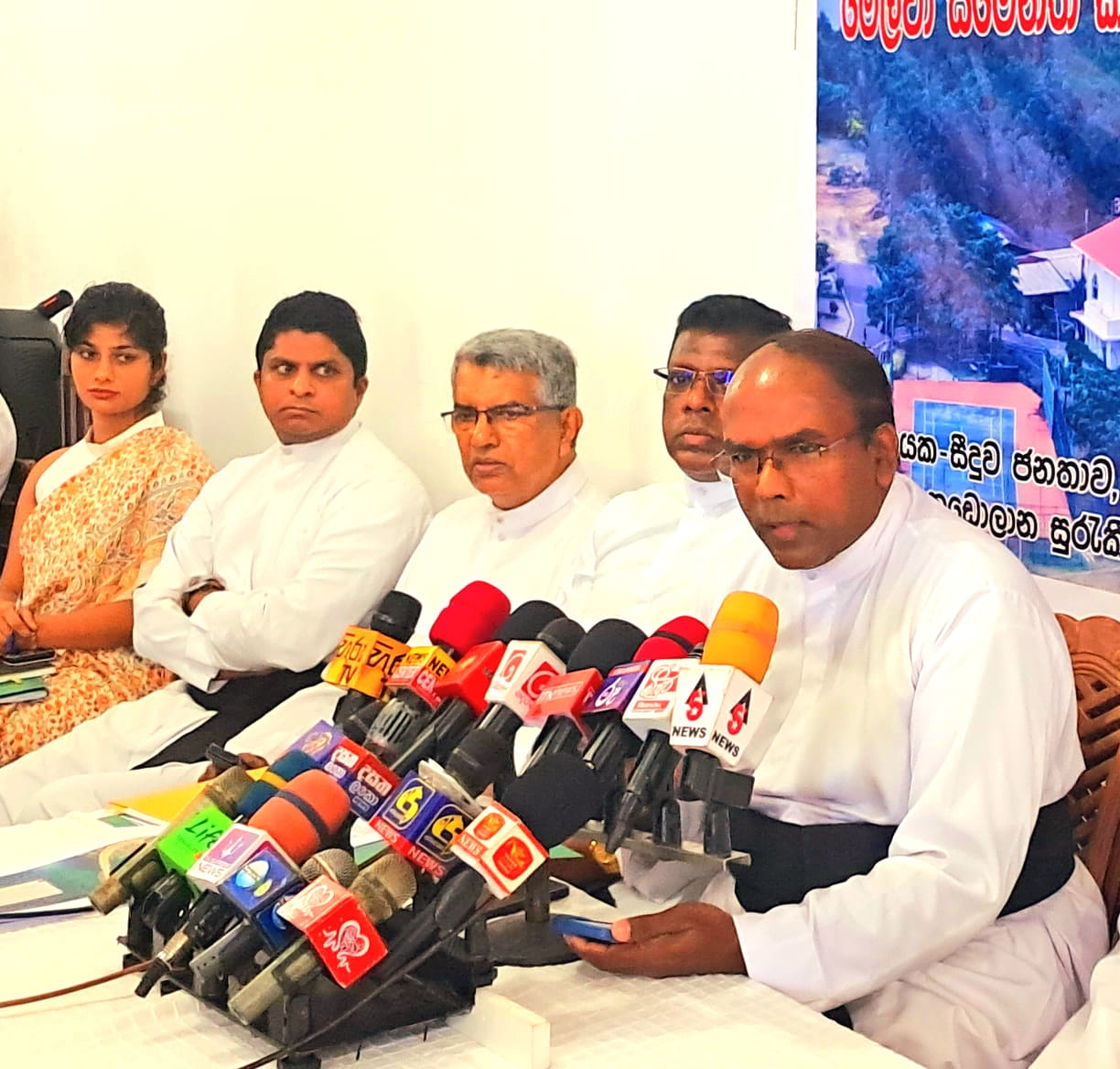
A special press conference was convened by a group of Catholic priests on September 19, 2026, at St. Thomas’ International College, Katunayake, to explain their opposition to the “Melva” Group cement manufacturing factory currently under construction in the Liyanagemulla area, Katunayake.
Commencing the press conference, Rev. Fr. Jude Krishantha, National Director of the National Catholic Mass Communication Center, emphasized that the proposed cement factory in Katunayake would pose a massive threat to the environment. He specifically pointed out that young children could experience breathing difficulties, leading to damage to their respiratory systems and the spread of illnesses. Therefore, he strongly stressed that this factory should be established in a more suitable location.
Furthermore, the Father stated that the land where this cement factory is being built is entirely unsuitable for such a venture. He noted that while approvals might be obtained in our country by submitting irregular documents, factory authorities might initially adhere to certain criteria and conditions, but could later act arbitrarily without any oversight.
Consequently, the Father firmly stated that this factory must be removed from this location. He added that if it is not removed, the public is prepared for large-scale protests, which could lead to major unrest, a message he firmly conveyed on behalf of the President and the government.
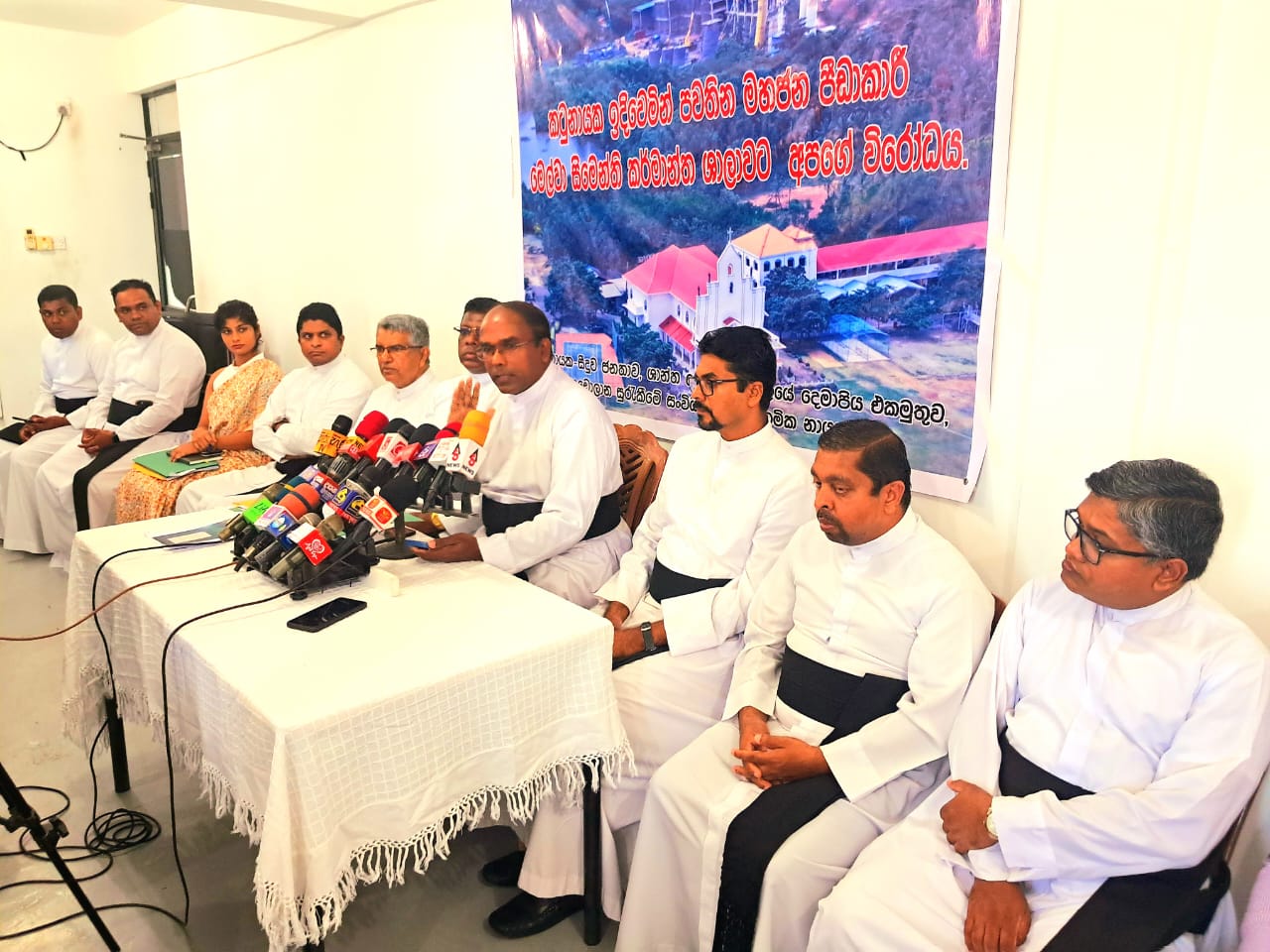
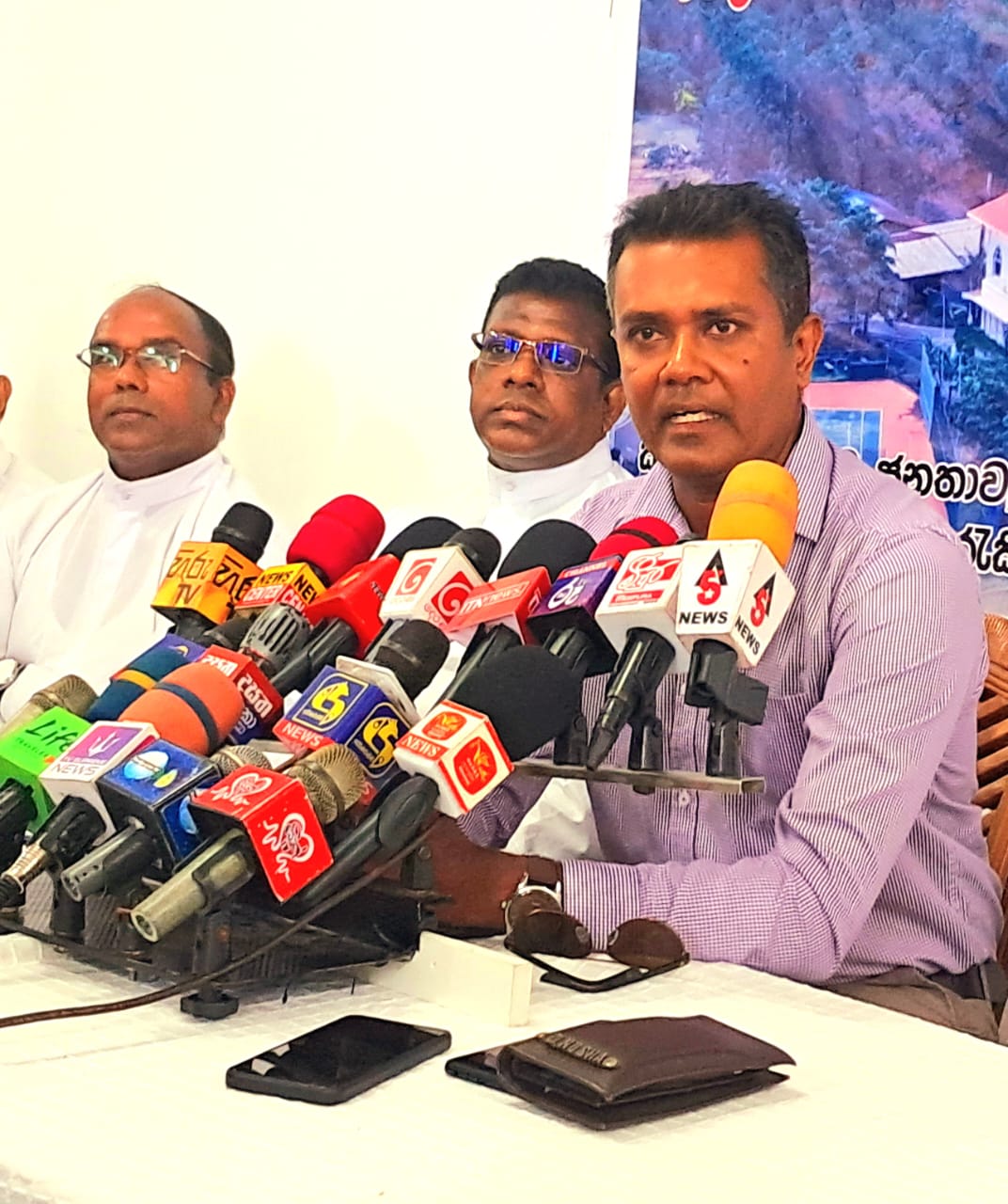
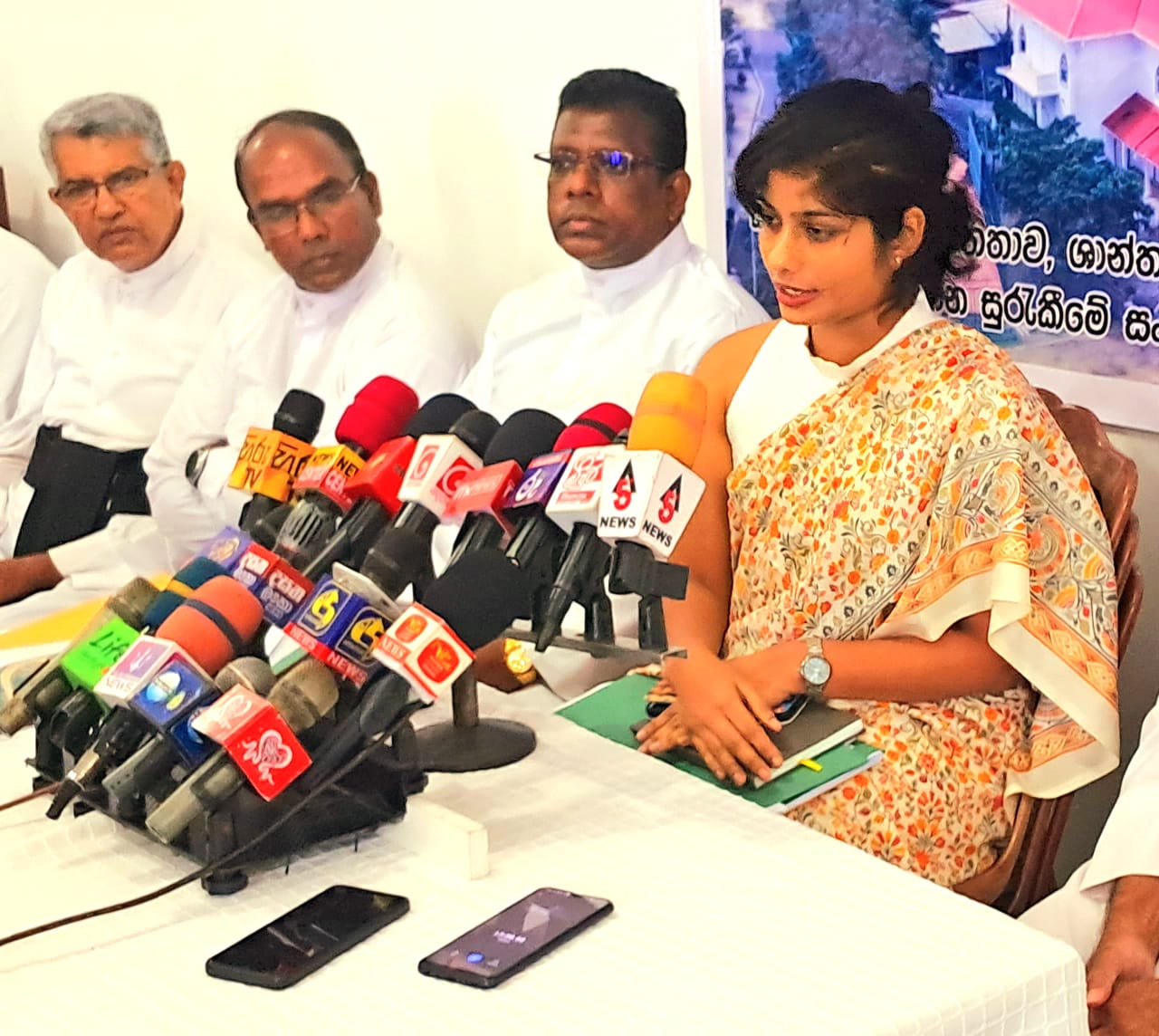
Subsequently, a journalist in attendance questioned whether the clergy and group were opposing the factory simply because it is a cement factory. The journalist also stated that the reasons for the opposition, the impact on the public, and the clergy’s precise understanding of the factory had not been clearly explained up to that point.
The response was delivered by Rev. Fr. Nilantha Heshan, Director of the Sethsarana service and the representative entrusted by the Archbishop of Colombo to oversee the Catholic Church’s operations regarding this cement factory. The Father expressed the following views:
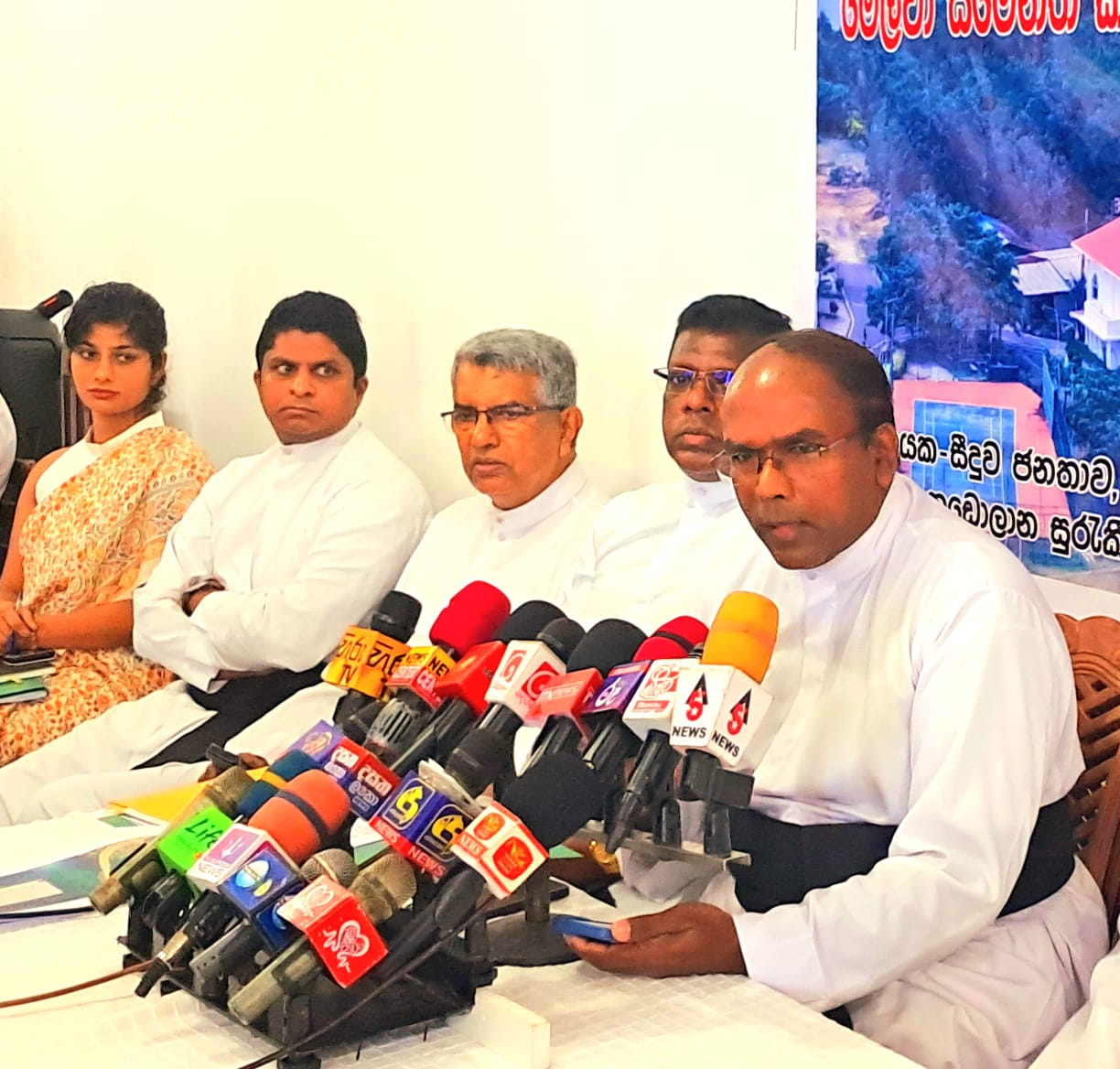
“About a month and a half or two months ago, the residents of this area, parents of the children in this school, and various religious representatives gathered and held a protest against this. At that time, every parent made an appeal and exerted pressure on the Archbishop to intervene and stop this. Following that, the Archbishop handed this responsibility over to me. He also directly notified state officials via letters to clarify the situation and state our opposition. At that time, the Archbishop wrote letters to the Central Environmental Authority (CEA) and the Urban Development Authority (UDA) asking them to halt this.
Subsequently, the CEA officials called a meeting, which I attended along with my representative priests, representatives from the Melva company, and all relevant UDA officials. During that meeting, we stated why we are opposing this. You asked why we are opposed to it; first of all, our issue is not with the company itself, but with the selection of the site. We say this location is completely unsuitable.
For one, there is a 10-year government master plan based on the Katana Pradeshiya Sabha, which mandates that the area surrounding the airport should be promoted as a tourism zone. Tourism zones can accommodate things like hotels tied to the airport, but a cement factory does not fit into this. However, these people applied for it as a ‘mini cement factory’. When applying under the criteria of a mini cement factory to the CEA, these representatives and business owners had to answer a 35-question questionnaire. If the CEA claims they granted approval, it was based on the answers provided by the company.
Based on that, very hastily on Christmas Day, December 25, 2025, officials granted approval. They had been renewing this license intermittently over a five-year period since 2020. So it was very efficient, getting approved right on Christmas Day! Normally, when conducting such a project, the initial plan for the site must be made known to the public, but this notification was not done. Later, when we investigated, suspicions arose. It was only in July that they put up a full board stating they were building a cement plant. However, we had previously known that tourism hotels were going to be built here to promote tourism, to which we had no objection. People became alarmed the moment a cement plant was suddenly announced.
Then, the company itself stated that between 1,500 and 2,400 bags of cement would be produced here per hour, which means it is no longer a ‘mini cement’ operation. With 1,500 to 2,400 bags per hour operating in shifts 24 hours a day, more than 57,000 bags would be produced daily.
Right after that, during the afternoon meeting, I stated our total opposition. We had a meeting with the President that very day, notified him through letters, and informed the relevant ministries. We trust that some action will be taken regarding this. Moreover, a valid government gazette in 2022 clearly categorized industries into grades A, B, and C regarding pollution levels. Grade A represents institutions with maximum environmental pollution, and clause 22 explicitly lists ‘cement industries (clinker grinding or manufacturing or re-packing)’ as having high environmental pollution. I questioned the Environmental Authority: how can they approve this when we point out that it is surrounded by a sensitive environmental zone—just 100 meters away from the Muthurajawela lagoon, dense human settlements, and schools? This is not an industrial zone.
We questioned them why they didn’t consult institutions like NARA for the lagoon reserve or the Muthurajawela sanctuary. When we questioned the CEA without consulting any of these, their response was simply that those consultations are not necessary.”
The Father also mentioned that while there are several other legal issues involved, discussing them here was not his role, as that is the domain of lawyers. Concluding his response to the question, the Father emphasized that, firstly, this location is entirely unsuitable for a cement factory, which should instead be placed in an industrial zone and is inappropriate for an area inhabited by sensitive human populations. He noted that there are three public schools in the area, raising the question of the children’s right to breathe, and stated that he did not know how the applications submitted to the UDA and CEA were processed. Because of these reasons, he reiterated their opposition. The Father repeatedly emphasized that the Archbishop stands with the people and that this factory is utterly unsuited for the location.
During the session, several journalists questioned Rev. Fr. Nilantha Heshan about a large-scale concrete mixing plant utilizing cement that currently operates very close to the proposed site, asking what steps the clergy are taking regarding it. The Father replied that they were only commenting on the cement factory at this moment.
Journalists repeatedly pressed the Father, asking why, if there were other similar sites nearby, they were targeting only one location instead of voicing opposition to all such places. They urged the clergy not to single out one spot but to take decisive action against all similar locations without hesitation, questioning why—if the zone is an environmentally sensitive area—only one site was selected for protest.
The Father briefly answered, “Not just one.”
A journalist then remarked: “You yourselves just said that you are only talking about this one.”
Another journalist presented a further question to the Father:
“Let’s make the question we are asking you clear first. We are asking why you are targeting just one organization on behalf of the people, citing that it’s a sensitive zone. The school we are currently in (Katunayake St. Thomas’ International School) is also in a sensitive zone built on reclaimed Muthurajawela land. So why are you picking just one organization to attack?”
The Father replied that the people themselves had asked them to intervene on this specific matter at this time.
The journalist countered: “Do ‘the people’ mean only that organization?”
Another journalist pointed out that there is a nearby concrete mixing facility which also releases dust particles into the atmosphere and the lagoon. Rev. Fr. Jude Krishantha responded that that facility might have been established before human settlements were formed there.
When a journalist stated, “You still haven’t understood my question,” Attorney-at-Law Isuri Rodrigo stepped in to address the gathering: “If you give us the names and the public raises their voice against them, we are ready to fight against them too. If there is public distress and environmental impact, we are prepared.”
A journalist then retorted: “You and the Madam have eyes, don’t you? Eyes are all you need; you don’t even need the people.”
Following this, Attorney-at-Law Isuri Rodrigo emphasized the concept of sustainable development. She stated that development must encompass people and the environment, not just economic growth. She approached the discussion from the standpoint that future generations yet to be born also have a right to enjoy this environment, and she argued that this cement factory threatens the area’s sustainable development.
She noted that the Muthurajawela environmental zone was gazetted as a highly sensitive environmental zone in 2021, and since no gazette was issued when recommendations for this cement factory were provided in 2022, the CEA must have granted recommendations without considering this gazette. Furthermore, she pointed out that there is a mangrove reserve in Liyanagemulla. Because environmentally sensitive locations are situated right next to the factory, approval from the Forest Department is absolutely essential, yet she stated that, to her knowledge, no such permission has been obtained from the Forest Department. Therefore, she urged state institutions—the Central Environmental Authority and the Urban Development Authority—to reconsider the approval granted for the cement factory, suggesting that a committee of educated individuals be appointed to re-evaluate the matter.
Finally, Dinusha Nanayakkara, Convenor of the Committee for the Protection of Muthurajawela, addressed the media. He stated that approvals were obtained under the guise of a tourism hotel while a factory is being built instead. Because this factory is being constructed in a densely populated area, he warned that micro-cement particles would spread with sea and lagoon winds, inevitably causing lung and respiratory illnesses among the thousands working in the Katunayake Free Trade Zone as well as school children in the area.
He also pointed out that siting this factory merely 500 meters away from the Katunayake International Airport poses a dangerous risk of cement dust entering aircraft engines, which would severely impact the country’s economy. Furthermore, he highlighted that cement dust particles entering the Negombo lagoon and the Muthurajawela mangrove ecosystem could disrupt the breeding of small fish fry, severely impacting local fishermen and the fishing industry.
The press conference was attended by several members of the clergy, including Regional Chief Prelate Shanthi Kumara Wellawita, Principal of Katunayake St. Thomas’ International College Antony Lakshman, Deputy Principal Jipson Fernando, and Deputy Director of Sethsarana Anura Dias, among others.